21 September 2005

Chutzpah, pure chutzpah

There's an article in today's York Dispatch about the upcoming Intelligent Design lawsuit. This particular article discusses the rats leaving the sin Discovery Institute's principled decision not to support the Dover school district in this case. Most of the quotes from the various DI talking heads is the usual stuff, but there was one statement attributed to Casey Luskin that displays a disregard for reality that is below and beneath even the rather loose standards of the Discovery Institute:
He [Luskin] said the Discovery Institute is "not trying to hinder their case in court," but the organization wants intelligent design to be debated by the scientific community, not school boards


"Debated by the scientific community, not the school board."

I was honestly shocked to read that. After almost a decade of following the various creationist strategies, I thought I'd seen every type of dishonesty possible, but this really takes things to an all time low.

"Debated by the scientific community, not the school board."

That's just about as far as you can get from everything that the Discovery Institute has actually done. Their fellows spend inordinate amounts of time pushing their philosophy in political forums, particularly educational ones. The scientific output of the Discovery Institute, measured in terms of material published in peer-reviewed scientific journals, is absolutely pitiful. The output of the Discovery Institute, measured in terms of press releases, op eds, letters to the editor, and other attempts to push their message in the public arena, is impressive.

But don't just take my word for it. The Discovery Institute has a list of "Peer-Reviewed and Peer-Edited Publications Supporting the Theory of Intelligent Design" up on their website. Scanning down the list, one can quickly count 34 separate items. Looking a bit more closely, one finds that three items are listed twice - once in the "featured articles" section at the top, then again in the appropriate section further down. Looking closer still, one finds that they listed a book which was edited by two of their fellows as one item, and then listed five chapters from that same book as separate items.

The following items are listed as "Articles Supportive of Intelligent Design Published in Peer-Reviewed Scientific Journals":

  • S.C. Meyer, “The Origin of Biological Information and the Higher Taxonomic Categories,” Proceedings of the Biological Society of Washington, 117(2) (2004): 213-239.
  • M.J. Behe and D.W. Snoke, “Simulating Evolution by Gene Duplication of Protein Features That Require Multiple Amino Acid Residues,” Protein Science, 13 (2004): 2651-2664.
  • W.-E. Lönnig & H. Saedler, “Chromosome Rearrangements and Transposable Elements,” Annual Review of Genetics, 36 (2002): 389-410.
  • D.K.Y. Chiu & T.H. Lui, “Integrated Use of Multiple Interdependent Patterns for Biomolecular Sequence Analysis,” International Journal of Fuzzy Systems, 4(3) (September 2002): 766-775.
  • M.J. Denton & J.C. Marshall, “The Laws of Form Revisited,” Nature, 410 (22 March 2001): 417.I.
  • M.J. Denton, J.C. Marshall & M. Legge, (2002) “The Protein Folds as Platonic Forms: New Support for the pre-Darwinian Conception of Evolution by Natural Law,” Journal of Theoretical Biology 219 (2002): 325-342.

That's a grand total of six articles that have been published within the last five years, for an average of 1.2 articles per year. That publication rate wouldn't be considered to be overly impressive coming from a single scientist, let alone from ten. It's even less impressive when you consider the fact that the DI's center for The Renewal of Science and Culture has about 40 fellows.

Over the same period, the Discovery Institute and its fellows have released dozens, if not hundreds, of press releases and op-eds advocating that their views be taught in public school classes in various parts of the country. Its fellows have testified before school boards and textbook adoption committees. They have waged, in short, a very agressive public relations campaign (even going so far as to hire a well-known public relations firm) trying to build popular support for their views.

Those are not the actions of a group of people who want to debate their views within the scientific community. Those are the actions of a group of people who are hoping that they can use a miniscule number of peer-reviewed articles as a scientific fig leaf to cover a religious agenda. If they really wanted to debate their views within the scientific community, they would be doing just that. They would be formulating and testing hypotheses, doing experiments, writing papers, and focusing their efforts at convincing scientists. They would certainly not be putting the vast bulk of their efforts into public relations.

They also wouldn't have been saying things like this:
[from a DI press release] The Discovery Institute today faulted defenders of Darwin's theory for refusing to defend their views before the Kansas State Board of Education and for being afraid to answer tough questions about the scientific problems of modern evolutionary theory.

“Darwinian scientists showed contempt for science and the citizens of Kansas by refusing to appear before the State School Board,” said Dr. Jonathan Wells, a biologist at the Discovery Institute’s Center for Science and Culture.


"Debated by the scientific community, not the school board." What utter, unmitigated hypocrisy.

20 September 2005

Tangled Bank 37

The Tangled Bank


The latest edition of Tangled Bank is available at Milkriverblog. Tony's clearly put a lot of work into this, and it's paid off. Enjoy.

Toxic Soup

Over the past couple of days, several articles have appeared in various places about the dangers from toxic materials in areas devastated by Katrina. All have discussed the environmental risks, health risks, and other dangers. The picture that these articles paint is grim. Even some of the more upbeat articles, contain phrases that are a bit alarming ("a toxic gumbo like we've never seen,"). The optimistic end of the timeframe for the entire city being safe to resettle is expressed in months. The pessimistic end... let's just say that it's pretty pessimistic.

The contamination comes from many sources. In fact, it is not at all an exaggeration to say that the contamination is coming from virtually everywhere. Many of the articles have listed household items as a source of contamination, and a few have even mentioned some of the more common household hazards. I'm going to do something that is (I think/hope) a little bit different. I'm going to take a look, in detail, at the household hazardous materials that are in my carport, and at the dangers of each.

It's actually pretty easy to find out what hazards, if any, are associated with items in your house. One of the various federal requirements (I believe it's OSHA's, but I'm not positive) is that Material Safety Data Sheets (MSDS) be available for pretty much any kind of chemical product that's sold in the US. They aren't very hard to find, usually. It's usually just a matter of going to the manufacturer's website and hunting around until you find them. If they're not available there, you can usually find them through google if you're persistent enough. I did that for the stuff that's out in the storage cabinet in my carport.

I went out, took a quick inventory, went on line, and started hunting. Listed below is what I found. I've grouped things into categories based on a rough assessment of how bad they are. The links on the item names should bring up MSDS sheets.

  • Mostly Harmless:


    • Fertilizer, 16-16-16, ~5kg. The ecological effects are listed as unknown, and there might be some. Large increases in the nutrient content of a body of water can lead to algal blooms and other unpleasantness. Right now, there's no way to know if the household fertilizer releases will have any impact.
    • RoundUp weed killer, ~1L. I really wasn't expecting the weed killer to wind up in this category, but it is minimally toxic and readily biodegrades.


  • Not Too Bad


    • Raid roach spray, 3 cans, don't know how full. The MSDS isn't all that helpful. All the ecological and long-term toxicological sections are listed as "unknown".

    • Bleach, ~6L. Poisonous and a short-term health risk. Long term/environmental also unknown.

    • Windex. ~2L. Not too bad healthwise, but there's a "keep out of watersheds" warning in the MSDS.


  • Not Good


    • Prestone Anti-Freeze (about 1L or so). Ethylene Glycol is not good for you. It's a poison and it can cause mutations. In addition to birth defect concerns, this also raises cancer concerns. According to the MSDS, no conclusive link has been found between antifreeze and cancer, but the short-term toxic effects alone are enough to put it into this category.

    • 10W40 Motor Oil, 3 quarts. The toxicological and ecological sections are listed as "unknown", but I don't think it takes an Einstein to figure out that motor oil is bad for stuff.

    • Acetone, ~500mL. Not good to breathe, not good to drink.

    • lacquer Thinner, ~5L. A tasty mix of methanol, xylene, toluene, ethyl benzene, and acetone. Yummy.


  • No Clue


    • Paint. Don't know what kind - the label is covered with paint. 2 or three partially congealed cans of this stuff. It's blue, but that's about all I know.

    • One unlabeled jar of something that I'm almost sure is more fertilizer. I seem to remember borrowing something from one of the neighbors to use on an orchid. (This kind of thing is worth a hefty OSHA fine when it happens in a lab.)


That's just from one small carport locker. Inside the house, there's a whole cabinet of assorted cleaning supplies. Ammonia, oven cleaner, scrubbing bubbles, more bug spray, more windex, and who knows what evil is lurking under the sink.

If half that stuff spilled in the lab at one time, I'd have to call the environmental safety folks to come over, clean it up, and drop 50 pounds of paperwork on my head. If it spills in my house during a flood, and is still there when I get home, someone (probably me) is going to have to clean it up. Probably nothing bad will happen right then, and probably the exposure won't cause long-term problems, but it might. The risk is definitely there. But that's only a very small, very localized part of the problem.

Take the list from my house, and assume that it is excessive. Assume that I've got more hazardous gunk in my house than 75% of the general public (actually, it's probably no worse than average). If so, and assuming that only 10,000 homes were badly flooded in the New Orleans area, that's still a total spill 2,500 times greater than the quantities I listed above. Let's put that into perspective: 1250 L of acetone, 12,500 L of thinner, 1875 gallons of motor oil, and that's just the start.

That's also just the household chemicals. There's still gas stations, dry-cleaners, carpet-cleaners, and a whole mass of other small businesses that deal with lots of chemicals. Then there are the landfills, and the superfund sites, and the petrochemical industries, and everything else. "Toxic gumbo" is probably an understatement. This situation is simply a nightmare. So far, the major oil spills alone total millions of gallons. There have been several news reports indicating that there is so much oil in some of the flood-deposited gunk that the testing labs are having problems detecting anything else.

And it gets worse.

Some of the stuff is going to wash away fairly quickly, but some of it is going to settle out into the sediment. The sediment is the mud that people are going to have to clean out of everything. That's not going to be easy. Some of that sediment is going to linger - maybe not in houses, but in yards, and parks, and other places.

A lot of the stuff that washed away quickly, and a whole lot of the stuff that settles out, is going to wind up in nearby bodies of water, like Lake Pontchartrain. Besides the short-term ecological effects, which are simply impossible to predict, there are also long-term effects that are impossible to predict. One question is going to be how much of the toxic material is going to accumulate in tissues. Will fish from that lake be edible any time soon? What about shellfish in the Gulf near New Orleans?

The sad and simple truth is that we just don't have any basis for predicting any of the effects of the toxic disaster. Nothing like it has ever happened in the United States before. It will, quite literally, be decades before we know what the long-term effects are. There are probably going to be some, and they are probably going to be bad, but that's about all we can say right now.

Cleaning this up is going to be difficult, but it is not going to directly involve most of us. Preventing a repeat of this, on the other hand, is something that should involve all of us. Do yourself, and the rest of us, a favor. Go out to your garage, or carport, or shed, or whatever. Look at the hazardous materials that are there, figure out what you really need to keep, and properly dispose of the rest. The regulations for this will vary from place to place, and it may be inconvenient. Do it anyway. After all, next time the toxic sludge might be in your livingroom.

19 September 2005

DNA and RNA (and Birdnow).

PZ Myers has, over at Pharyngula, taken issue with a remarkably ignorant essay written by Timothy Birdnow. Birdnow has responded with a new blog, PZ has responded to part of the response, and so the fun begins. At the risk of being seen as just piling on to an easy target, there are a couple of important points that I don't think have been raised yet. The first has to do with exactly what constitutes the "building blocks of life"; the second has to do with basic competence.

Below is a quote from the exchange between Birdnow and Myers where the question of the "building blocks of life" is raised:
Birdnow:
What, you may ask, is the connection between Einstein`s proof of atoms [his explanation of Brownian motion] and Darwinism? Darwinism argues that all life evolved from a less complex state. Following the chain of life backwards, one eventually comes to the most basic unit of life-deoxyribonucleic Acid (the DNA molecule). The DNA molecule is composed of the even simpler RNA molecule, and is the fundamental building block of life. It is the largest, most complex molecule in nature. According to Einstein`s theory, the original DNA (and RNA) Molecules should not have formed and survived since there are being constantly buffetted by energized atoms. The establishment of life required energy, and that energy meant that the nascent DNA was exposed to more energetic particles which should, logically, have prevented the formation of such a large and complex molecule. That this molecule not only formed but spread suggests different mechanism at work then those proposed by the Darwinists.

Myers
DNA is not made of RNA. They are two molecules with similar structures, but different sugar backbones and a small difference in the bases.

Birdnow:
Oh, so now we have two completely different molecules as the building blocks of life! Life did not begin once, but twice from seperate building blocks! You know, Doctor, that DNA is fundamentally an advance on RNA. You are playing games here, and it does not disprove a thing I have said.


Both DNA and RNA are very important to life, and they are currently important for different reasons. They are also both representatives of only one of the types of molecule that are of fundamental importance to life. Both DNA and RNA are macromolecules (big molecules) made by stringing together (polymerizing) a large number of smaller molecules. DNA and RNA are both members of the class of macromolecules known as nucleic acids. Nucleic acids have three main parts: A sugar molecule, a base, and a phosphate group. DNA and RNA differ in the sugar that they use (RNA uses ribose; DNA uses a ribose that is missing an oxygen). Both use four different bases, and share three of them (adenine, guanine, and cytosine). The fourth base in RNA molecules is uracil, while the fourth base in DNA is thymine.

In addition to nucleic acids, there are also proteins, sugars, and lipids (fats). All of those are also critical to life as it now exists. Proteins are important in allowing cells to carry out chemical reactions, sugars are important for energy storage and transfer, and lipids are important in creating the barriers that separate the inside of the cell from the outside. All of these are fundamental building blocks of life as we know it.

I've stressed that these are important to current life for a reason. Just because something is critically important now does not mean that it has always been critically important. For example, the keystone at the center of an arch is totally critical to the structural stability of the arch. Remove the keystone, and the whole thing collapses. The keystone, however, is the last structural component added to an arch. Prior to the placement of the keystone, the structural stability is provided by scaffolding. After the placement of the keystone, the scaffolding is redundant, ugly, and unnecessary, and it is quickly removed.

I'm not trying to suggest that there used to be some sort of "scaffolding" that took the place of one or more of these types of macromolecule - we don't know that. I'm simply trying to point out that the current importance of nucleic acids does not necessarily imply that nucleic acids were always as important as they are now. That is one of the things that origin of life research is currently examining.

It is possible that neither DNA nor RNA was critically important to the development of life. It is possible that both were. It is possible that either (or both) were very important, but not in the same way that they are today. Right now, those aren't questions that we can answer.

What I can say, however, is that Birdnow is entirely wrong when he claims that "DNA is fundamentally an advance on RNA." DNA is better than RNA when it comes to the long-term storage of genetic information. RNA tends to degrade relatively quickly, and stability is important if genetic information is going to be reliably stored and transmitted to the next generation. RNA, however, is better than DNA at a number of other tasks. In addition to being used to take the information from DNA to the ribosomes for use in constructing proteins (messenger RNA), RNA strands also make up part of the ribosomes (ribosomal RNA). RNA is also used to collect the amino acids that are added to the protein (transfer RNA). For these tasks, a single-stranded RNA molecule works much better than double-stranded DNA.

DNA is no more of an advance over RNA than humans are an advance over the cockroach. DNA is different from RNA and does different things than RNA. Similarly, if you want a poem written or a city built, you want a human. If you want something that is likely to live through a nuclear holocaust, the cockroach is a better choice. Along the same lines, the hammer is not an advance over the wrench. Different tasks simply call for different tools - and this happens to be as true within the cell as it is at a construction site.

In addition to the misconceptions over DNA and RNA, Birdnow's uninformed diatribe also provides an illustration of a very interesting phenomenon: the tendency of people who have a minimal understanding of science to believe that they are as qualified, if not more qualified, to comment on scientific issues as professional scientists are. Let's take another look at part of Birdnow's statement:
You know, Doctor, that DNA is fundamentally an advance on RNA.
Later on in the post, he goes on to complain of part of Myers response:
This is the old ``I know more than you and I say so`` canard.
When Myers complains - entirely correctly - that Birdnow displays a massive knowledge deficit in the field of biology, Birdnow is apparently highly offended:
Boy, if that isn`t the pot calling the kettle black! The main reason I wrote this was because I became increasingly irritated with the monstrous arrogance and utter closed mindedness of Darwinists such as Dr. Myers. Perhaps, Dr., if you found this essay hard to understand you should find yourself a fifth grader to explain it to you. You don`t seem to have a command of logic.

Birdnow, who is a property manager, apparently feels that his understanding of biology is secure enough that he can tell a professional biologist what is what. Similar beliefs about the nature of science seem to be very common, as was pointed out over at Photon in the Darkness a while back. The people over at American Thinker, who posted the original Birdnow piece, seem to find this completely normal. Yet, in virtually any other area of American society, such beliefs would be considered completely ridiculous.

In fact, scientists who dare to suggest that they might be more qualified to comment on scientific matters than non-scientists run the risk of being branded as "elitists". It's not elitism, folks, it's specialization. Modern society is far, far too complex for everyone to be good at everything. Most people select career paths that are specialized fields, and they are (normally) better at their own field than they are in other fields. This means that they are (normally) better able to develop informed opinions about matters within their fields than are people who lack the strong background in that area.

I suspect that Tim Birdnow knows a hell of a lot more about property management than I do. I also suspect that when the roof is leaking at a property that he is responsible for, he calls a roofer to fix the problem, not a plumber. Yet, despite this, he thinks that he has a sufficient knowledge of biology to publicly claim that, "Any way you look at the issue, Darwinism is on the ropes."

Mr. Birdnow, if I tried to tell a plumber how to fix a sewer problem, I'd look like a fool. And rightly so. If I tried to tell you how to manage property, I'd look like a fool. And rightly so. When you try to tell me that you know more about biology than I do, you look like a fool. The truth is that, as far as anyone can tell from reading your post and response, you don't know diddly squat about biology, geology, or paleontology. Your writing is, in fact, jam packed with misconceptions, misunderstandings, and outright errors.

When I tell you that, I am not being arrogant any more than a teacher is when they point out errors in a student's test. I am presenting an evaluation of your work that I am actually qualified to make. PZ Myers is even more qualified (much more qualified) to make that evaluation. Both of us have taken numerous classes in biology, both of us have undertaken research, both of us know the field. We understand biology, and we can tell when other people don't. You don't.

Suggesting that I may be more qualified than you are to determine how well you understand biology is also not "elitism". It is specialization. The fact that I am a biologist does not make me any better or worse, in a general sense, than a butcher, a baker, a property manager, a janitor, or any other trade. It just means that I know more about biology than people who aren't biologists, and that I am, for that reason, more qualified to make statements about biology than people who aren't biologists. I don't know why so many people have a problem with that.

18 September 2005

Another interesting human evolution-related paper

An interesting paper by a group of researchers from the Max Planck Institute for Evolutionary Anthropology has appeared in the latest edition of the journal Science. The researchers have taken an interesting approach to investigating the differences between humans and chimps - they have used a relatively new genetic tool known as microarray analysis to examine the differences in gene expression between the chimps and humans. Their results are interesting for two different reasons. First, it is always interesting to learn more about the differences that separate us from our nearest relatives. Second, this paper has actually used the human-chimp relationship as a model system to investigate some basic evolutionary questions.

Before we get into the meat of the paper, a bit of an introduction is called for. The single, most basic lesson that is taught about the way that genes work in the cell is known as the Central Dogma: DNA is transcribed to produce RNA, and RNA is translated to produce protein. It's a nice, clearly stated concept, and it has the added virtue of often being true. DNA is transcribed into RNA, and the RNA is "read" in the cell's ribosomes to produce the various proteins that carry out most of the cell's functions. The Central Dogma is simple and relatively easy to understand.

Like most statements that are simple and easy to understand, the Central Dogma is not entirely true. There are some cases where the RNA is the final product, and does something else besides code for a protein. The RNA sometimes gets edited before it is used to make a protein. Some of the DNA has functions other than directly making protein. Genes work in more complex ways than those specified in the Dogma, and the Dogma doesn't cover all of the important parts of what goes on in the cell.

One of the things not covered by the Central Dogma is the matter of gene regulation. This is an important process in all living things, and is particularly important in complex multicellular organisms. Every cell has all of the DNA needed to do everything that the organism does, but not every cell actually does everything. In fact, after the early stages of development, no cell does everything. Different types of cells develop in different tissues and organs, and need different amounts of different proteins at different times.

I'm not going to get into the fine details of gene regulation here. For the purposes of understanding this one paper, it is enough to know that different cell types are going to need to make different amounts of various proteins at various times. Since these proteins are made from RNA, we can find out active a given gene is in a cell by looking to see how many copies of the RNA transcript for that gene are floating around in the cell.

Microarray analysis provides us with a method for comparing the amount of DNA expression for various genes in the same types of cell in two different species. The details are fairly complex, and you don't really need to understand them to get the basic gist of what was done in this paper, but if you want to know more, you can look here.

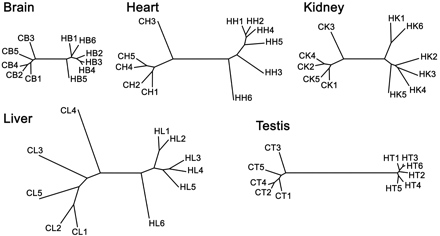
In the experiment reported in the Science article, the researchers used microarrays to examine the relative expression of different genes in humans and chimps in a number of different tissues - heart, kidney, liver, testis, and brain.


On the left, I have reproduced figure 1 from the Science article. This figure shows the differences in gene expression observed in the various individuals sampled. The samples that begin with "C" are chimps, and those that begin with "H" are human. The lines indicate the size of the difference, with short lines indicating little difference, and long lines indicating a great deal of difference. These results are quite interesting.

One of the things that they show is that in the sampled tissues, the greatest similarity in gene expression levels between humans and chimps is actually in the brain, while the greatest differences are in the liver. This probably isn't what you might have expected to see. After all, the differences in thought and behavior are generally considered to be enormous between humans and chimps. So what do these results actually indicate.

In the opinion of the paper's authors, these results demonstrate the importance of neutral changes in evolution. In such a model, most genetic change accumulates in places where it does not positively or negatively affect survival. The heart, the kidneys, and the liver function more or less the same in humans and chimps, and the figure shows that the differences in gene expression within humans and within chimps are similar to the difference between the two groups. Such a result indicates that selection has not been a large factor driving the divergence in expression in those tissues. Selection does appear to have been a factor in the differences in the testis, and it may have been in the brain.

So what might all this mean? The authors of the paper sum it up well:
we find that the patterns of evolutionary change in gene expression are largely compatible with a neutral model, in which different levels of constraints acting in different tissues add up for single genes. These evolutionary constraints act in a similar manner on the coding regions of DNA sequences and thus lead to parallel patterns in expression and sequence evolution. In contrast to the overall picture of selective neutrality, two examples of putative positive selection stand out. First, testis shows an excess of expression differences between species and an enrichment of both expression and amino acid sequence differences on the X chromosome. Second, the brain, although under more constraints than the other tissues, has an excess of gene expression and amino acid changes on the human lineage compared to other tissues. This suggests that evolutionary changes at both the level of gene regulation and the level of protein sequence have played crucial roles in the evolution of certain organ systems, such as those involved in cognition or male reproduction. Consequently, the modest number of sequence differences in genes between humans and chimpanzees cannot be taken as evidence that regulatory changes would necessarily be more important than structural protein changes during human evolution. Rather, both types of changes are likely to have acted in concert.


It's going to be interesting to see what the response to this paper is. In some ways, the findings back up some of the things that we've long suspected about the divergence of chimps and humans - in particular, that the differences might be mainly due to selection acting on a fairly small number of traits. In other ways, such as the suggestion that changes in proteins might be as important as changes in gene regulation, this paper may challenge the traditional model of human/chimp divergence. This kind of mixed result is kind of nice to see. It hints that we haven't been entirely wrong in the past, but that there is still plenty more to learn about what drove the speciation process that split us from the chimps.

Reference:
Parallel Patterns of Evolution in the Genomes and Transcriptomes of Humans and Chimpanzees
Philipp Khaitovich, Ines Hellmann, Wolfgang Enard, Katja Nowick, Marcus Leinweber, Henriette Franz, Gunter Weiss, Michael Lachmann, and Svante Pääbo
Science 16 September 2005: 1850-1854.

17 September 2005

Wildlife pictures - Drosophila

There are very, very few organisms with scientific names familiar to the general public. So I was actually pretty psyched to find that Drosophila is familiar enough that it's in the spell checker dictionary. There's a reason for that, of course, and it doesn't have anything to do with wildlife. Drosophila melanogaster is the "fruit fly" that's been used in thousands of laboratory experiments over the years. Lots of people have gotten to see them in high school or college labs, crawling around in little tubes with food in the bottom.


D. melanogaster may be the popular member of the genus, but it's got a lot of company. This single genus contains an enormous number of species - well over 1000 have been described to date, and there are hundreds of species that have been collected but not yet described. There are species of Drosophila known from all over the world.

Many of them are native to Hawaii. Millions of years ago, a single species of Drosophila arrived in the Hawaiian Islands. The population that arrived was very small, perhaps as small as a single fertilized female. From that small start, an amazingly diverse fauna has evolved. Hundreds of species have been described to date, hundreds more have been collected but not yet formally described, and there is now way to know if we have discovered all of them yet.


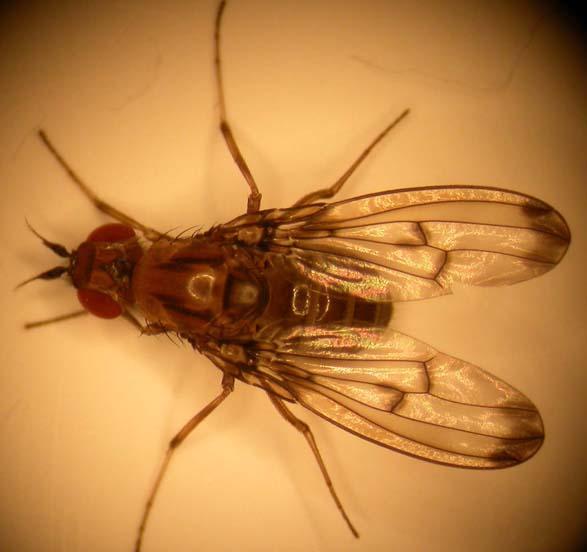
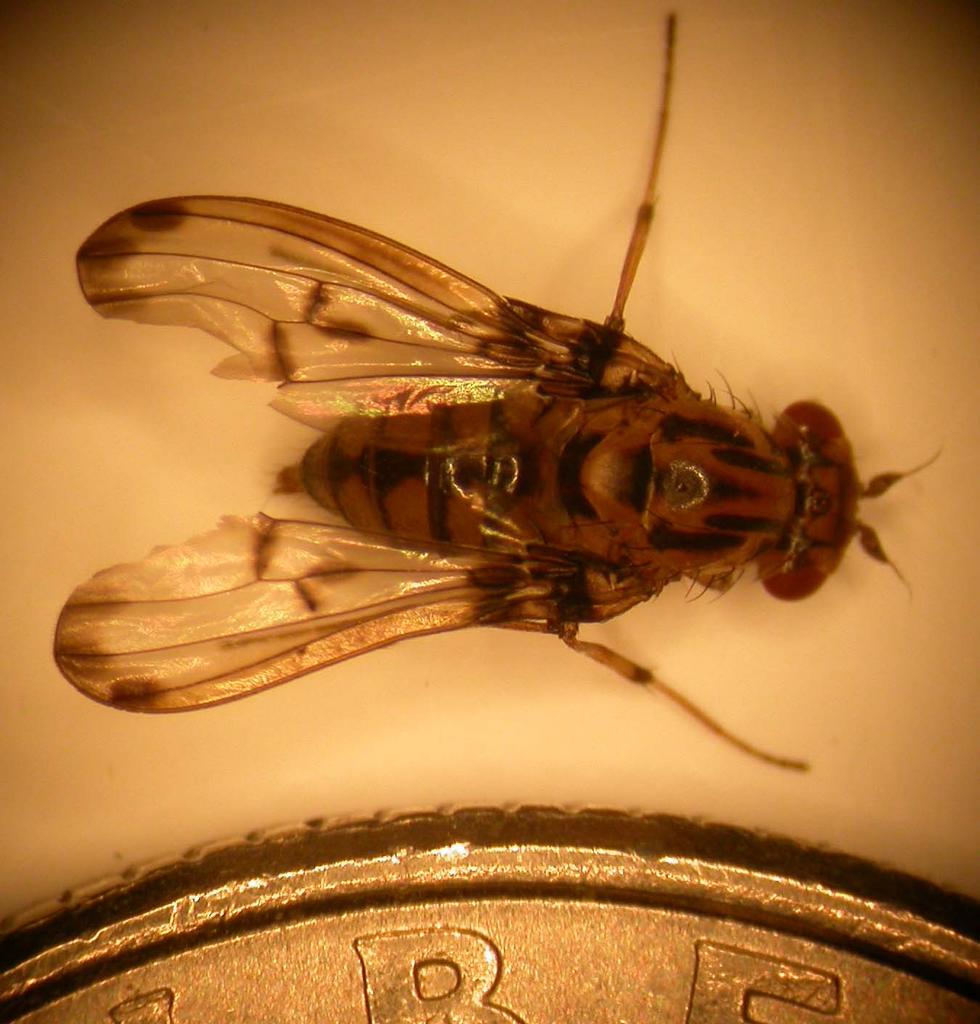
The pictures show two of the species from one of the better-known groups of native Hawaiian Drosophila - the "picture-winged" group. These flies are giants among Drosophila - almost as large as house flies. The two flies pictured here are both about the same size, and the picture on the bottom has the edge of a quarter for scale.

The top picture is Drosophila silvestris, and the photo on the bottom is Drosophila heteroneura. Both are endemic to the island of Hawai'i (the Big Island), and both are usually found living in the same locations. They are closely related species, and can hybridize in the lab, where they yield fertile and vigorous offspring. In nature, however, they do not appear to interbreed.

Both pictures were taken with a 4MP Cannon digital camera, shooting through a binocular microscope at 6.3x.

16 September 2005

Let's get back into the reality-based community.

The president gave me a nice surprise earlier in the week when he expressed a willingness to take responsibility for the federal government's failings after Katrina. A very faint hope began to stir within me when I heard Bush accept responsibility - was it possible that the administration was starting to move back toward the reality-based community? Today, the president brutally dashed that hope. Despite a federal deficit that is already at monumental levels, the president has ruled out raising taxes to pay for the post-Katrina recovery. Instead, he wants to offset these new expenses with budget cuts in other programs.

Some realism would be nice. There are definitely a few places where there is fat left in the federal budget. One notorious example is the $250 million bridge to the Alaskan island with the population of 50. That's $5 million per resident, which does strike me as just slightly excessive. But lets put things into perspective, shall we? The total cost of that bridge works out to be approximately the same as the cost required to keep the war in Iraq running for six hours. If Bush somehow managed to go back and get rid of all of the pet projects Congress earmarked mony for in the transportation bill, he'd still only have recovered slightly more than 10% of the estimated cost of the hurricane cleanup.

We need to get back into the real world. We are running a war, and we have a massive domestic disaster on our hands. Those are things that the nation is going to have to pay for, one way or another. We can pay sticker price now, or we can put off paying for a while, and force our children to pay way, way more than the original costs. Let's be adult about things, for a flipping change. We need - all of us - to make a few sacrifices, for the sake of the future.

15 September 2005

Children and animals

I've been able to resist, for the most part, blogging about the cute things that my kids do, but there was an episode night before last that was just too good to keep to myself.

My dog, Ross, has been porking up a bit lately, and I'd been having a difficult time figuring out why. I hadn't been feeding him more, he hadn't been getting too many snacks, he hadn't been getting into the trash, so I just wasn't sure what was going on. Then, last night, I got a hint of one of the possible causes.

I woke up around 2, and went downstairs to get something to drink. When I did, I found that the lights were on, and my son (who is 6) was down there with the dog. They were both sitting on the kitchen floor, they were both eating Pop-Tarts, and they both looked up at me with exactly the same guilty expressions on their faces.

From what I was able to piece together, my son started this tradition a couple of weeks ago when he was sick and not sleeping well. The dog, who is a fast learner, decided that the tradition should continue, and has been waking him up for the midnight snacks. That was, at least, what the boy claimed was happening. I was a bit skeptical, but an empirical investigation conducted last night seems to have confirmed this scenerio. Dog and boy are now being kept isolated from each other at night.

14 September 2005

The Pledge of Allegiance case

I see that a California judge has once again ruled that the "under God" phrase in the pledge is unconstitutional. This ruling, particularly since it comes at a time when the Supreme Court is being reshaped by two vacancies, is going to stir up a great deal of interest in the legal process, in the actions of judges, and in many other aspects of our legal system.

Actually, it's already stirring people up. It only took me a few minutes to find a few interesting posts about this isssue on different blogs. A group called Project 21 issued a press release that attacked the ruling as an example of "judicial activism":
"This is yet another in a series of attacks on the religious traditions on which our nation was founded," said Project 21 member Kevin Martin. "For far too long, the liberals have used our courts as a way to create rules they cannot achieve popularly through an elected, representative legislature. If anything is unconstitutional, it is this vicious display of judicial activism."

After that almost obligatory display of contentless sound and light, the Project 21 press release went on to argue that the reference to God in the Pledge is simply a form of "ceremonial deism", and it is therefore not an unconstitutional establishment of religion. (I personally find it amusing that they argue, in the same press release, that the Pledge of Allegiance represents the "religious traditions on which our nation was founded" and that the pledge is "ceremonial deism" devoid of any real religious implications.)

I really don't have much of a problem with "ceremonial deism". If the Supreme Court wants to open their proceedings with the invocation, "God save the United States of America and this honorable Court," that isn't a big deal for me. As I understand it, they've always done things that way. If so, then I'd have to agree that the tradition is mostly just that - a tradition - and that the religous content is really pretty much secondary. I personally think that putting "In God We Trust" on currency is a bit pointless, but it doesn't reduce the value of the currency in the hands of an atheist, and I don't really think it would be worth the trouble to remove it.

I don't have much of a problem with references to God in historical documents, in old traditions, or in patriotic songs. If Newdow ever sues to keep a school from forcing students to sing the "Battle Hymn of the Republic", I would hope he gets his ass laughed out of court. Despite the theistic references in that song, it is an important part of our history, and there are good reasons to expose students to it. The fact of the matter is that even if religion has not officially been important to our nation, it has been very important to many of the people who have shaped our nation, and it is a part of many American traditions. Take, for example, Thanksgiving. The first Thanksgiving was very much the theistic event. Any explanation of the holiday should mention that. To do anything else would really corrupt the meaning of the event.

This particular case, however, is different. When the Pledge of Allegiance was written in 1892, and when it was adopted in 1942, it did not contain the words "under God". The pledge simply stated, "One nation, indivisable". (They obviously didn't write that part yesterday.) The words "Under God" were added to the pledge in the 1950s, by act of Congress. They were added for a specific purpose: to distinguish the United States and its form of government from the "Godless Communists".

That's not "ceremonial deism". That's not something that is just a historical part of the Pledge. That's not just doing things the way they were always done. That is the United States Congress writing a law that pretty much says that atheists are not as "American" as theists. That is an establishment of religion, pure and simple.

I just hope that more people on the courts have the courage to stand up and say that, no matter how unpopular that may be.

Everything that's wrong with FEMA in a nutshell...

There was an absolutely unreal story on NPR today about the disaster medical center that operated out of Louis Armstrong International Airport during the evacuation stage following Katrina. A number of physicians complained about difficulties in obtaining needed supplies. Apparently, FEMA officials were not sending in supplies unless the requisition forms were properly filled out and sent to the Baton Rouge headquarters. The lack of a working fax at the airport did not, apparently, enter into the equation.

NPR had part of an interview with Col. H. James Young, the FEMA official in charge of the airport, on Morning Edition today. What he had to say indicates some major problems in that organization (not that this is news at this point, of course). The audio from that segment is available online. The transcription below is my own.
Supplies showed up. We had what we needed to do what we needed to do... These doctors, they work in these ERs, in these big hospitals or wherever it might be, and they may not have certain procedures they need to go through. They can say, "I want this right now," and they have it. Well, this is the federal government, and it has procedures that we go through."

It really needs to be heard to be believed. This man - this very model of the modern inept bureaucrat - really sounds like he thinks that the problem is the expectations that the doctors have, not anything wrong with the system. Heaven forbid that the federal government give doctors, during an emergency, what they want in the shortest amount of time possible.

I'd like to suggest something a bit radical here. Maybe, just maybe, we should make sure that the people running things at FEMA understand that there's a time and a place for paperwork. In the middle of a massive medical crisis isn't it. That's when you put people who are not merely intelligent and qualified, but also creative and flexible thinkers in charge. That's when you let them improvise, to do what they need to do to get the job done now. Write down the expenses. Keep track of what is going where, as much as you can. But get the stuff there now, and do the triplicate BS later.

Fieldwork in strange and exotic localities.

There are lots of scientists, particularly in fields like geology and zoology, who choose their fields because of the opportunities for fieldwork. There is a romance to the idea of the rugged scientist wandering out in the deserted field looking for the evidence that will lead to the next big discovery. There is the lure of strange places, and untamed wilderness. There is a fascination with the wild. In the summer, the mind of the young scientist turns to the field. And then you learn about the need for funding, and hopes and dreams come to a crashing halt.

A very interesting article in today's New York Times reminds us that nature doesn't actually end where human occupation begins, or even in places where human occupation is at its most dense. There are geologists doing fieldwork deep in the wilds of New York City, where the glacial terrain of Central Park continues to yield new lines of evidence that may help us learn about some of the climate changes that marked the end of the last major glaciation.

12 September 2005

Sharing responsibility and accountability.

An editorial in today's Washington Post examines yet another group whose role in the Katrina fiasco needs to be examined: the United States Congress. So far, their actions have received relatively little scrutiny, but some of their actions (and inactions) seem to have played a part in setting the stage for the disaster.

With so many failures at so many levels of government, I'm starting to think that any investigation should be done by a bipartisan, independent commission. The 9/11 commission could serve as a model, as could the Warren investigation of the Kennedy assassination. Such a bipartisan, independent body would have the best chance of reaching findings that people can trust.

Drawing careful conclusions

Well, when I said that the last post would stir up some controversy, I wasn't wrong. In the comments section, someone has already accused me of "political correctness" for refusing to draw the conclusion that the two alleles reported in the study are being selected due to their effects on brain size. This accusation was predictable, and it is wrong.

Political correctness has absolutely nothing to do with the proper interpretation of this study. If I thought that the only explanation for the positive selection was the effect of the mutation on brain size, I would have no problem whatsoever in saying that. At present, however, we simply don't know what the exact effect of the mutation is.

We know that the gene is involved in brain size determination, but that does not mean that the mutation in question has anything at all to do with increasing or decreasing brain size. It doesn't mean that the allele results in better brain function. It doesn't mean that people with this allele are smarter than those without it. When the researchers report that an allele of this gene has been subjected to positive selection, and that the gene therefore continues to evolve adaptively, it means just that and nothing more. Determining why the allele is positively selected requires that we study the effects of the allele.

Here's an example that might help illustrate things: the sickle cell trait. I have not run the statistics, but I'm reasonably confident that the allele for this trait shows the effects of positive selection in some populations. Yet the allele does not have a postive effect on the normal functioning of the gene. In fact, the effect of this allele is extremely negative in homozygotes. The positive selection stems from the effect that this trait has in increasing resistance to a disease, not in its effects on the oxygen-carrying functions of hemoglobin.

For all we know, the situation with either or both of the alleles discussed in these two studies is exactly the same - they might actually have a negative impact on brain size, but be positively selected for other reasons. It is also possible that the reason that these alleles have been positively selected is because they result in an enormous increase in intelligence. But we don't know that, either.

Restricting the conclusions that you draw from a study to those supported by what the study actually demonstrates is not political correctness. It's just responsible science.

11 September 2005

Wake up, and smell the controversy

There are a pair of articles in this week's edition of the journal Science that are almost certainly going to cause some excitement and controversy in the field of human evolution. Controversies in this area are nothing new, of course, but these articles seem to have all of the necessary ingredients for a spirited debate. They also seem to be almost certainly destined to be miscited by any number of unsavory individuals.

Although the two articles have slightly different sets of authors, both come from the same laboratory, and both focus on the same topic: natural selection acting on genes involved in the development of the human brain. Two different genes were examined, and in both cases specific versions of the genes - alleles - were found to be present in frequencies that indicate that they have recently been (or still are) the subject of strong selective pressure. In both cases, the alleles appear to be very new - younger than the appearance in modern humans. Finally, and here is the bit that's going be the most controversial part of this, the selectively favored alleles are less likely to be present in people from certain geographic locales.

The first paper discusses the evolution of a the gene known as Microcephalin. This gene got its name because a lack of function in both copies of this gene causes a genetic disorder called microcephaly. Individuals suffering from microcephaly have brains that are extremely small, but which have normal structure.

The team of researchers had previously investigated the evolution of this gene within primates, and had noted that this gene appeared to have been the subject of strong positive selection in the lineage leading up to apes and humans. They report, in the Science article, that during the course of this study they noticed that one version (or allele) of this gene appeared to be very common in the humans that they had looked at. They also found that this version of the gene caused an amino acid change in the protein that it produces, due to a single mutation changing amino acid 314 from aspartate to histidine. This kind of thing is very exciting to people who do evolutionary genetics, so they decided to investigate further.

They looked at sequences for this gene from 89 different humans, with a wide range of geographic origins. They found that the region of the gene that they were looking at contained 220 different places where there were variations in the specific nucleotide ("DNA letter") at that position. They also found that there were 86 different alleles present in the population that they had examined. One of these alleles was extremely common compared to all the others. Out of the 178 copies of the gene (each person has 2 copies) that they looked at, 59 of them - 33% - were that one allele. 18 individuals were homozygous for that allele (meaning that both of their copies were that allele). The next most common allele was present in 11% of the copies.

That's the type of data that screams "selective pressure" the second you look at it. But it is possible to be more scientific about investigating it. One of the things that you can do is to use computer simulation to figure out what the probability is that you would see the same results if the allele frequency was the result of chance. The investigators used a set of very conservative estimates about human population dynamics, and ran the simulation 5,000,000 times. None of the simulations yielded the observed results. This is a very strong indication that the common copy of the allele is selectively favored.

The investigators also looked at the age of the allele and the geographic distribution. They found that the allele appears to be quite young (~37,000 years). They also found, and this is the part that is likely to stir up controversy, that the allele is much less common in sub-Saharan Africa than in the rest of the world. (It seems to be most common in populations from the Americas.)

The second article looks at the evolution of ASPM, which, like Microcephalin, is involved in the development of brain size. As in the first study, an allele was found to be present with a frequency far greater than one would expect if the allele was neutral. This allele turns out to be even younger than the Microcephalin allele reported earlier, with an estimated age of only about 5,000 years. It also shows an uneven geographic distribution. As you might expect, the younger allele is less widespread than the Microcephalin allele. It is most common in Eurasian and North African populations, and it is quite uncommon in Native American, sub-Saharan African, and some East Asian populations.

Two studies, both of genes involved in brain development, both demonstrating extremely strong indications that one allele has experienced very strong positive selection, and both indicating that the positively selected alleles are more common in Europeans than in most Africans. I suspect that these results are going to bring joy to what passes for the hearts of a number of slimebags. They shouldn't, but they will. They will because the pussbuckets in question are always willing to grab onto anything they think supports their narrow-minded beliefs with both hands. They shouldn't get excited because these results actually don't say anything about intelligence.

We don't actually know why those alleles have been selected. The genes are involved in the development of the brain, and in brain size, but the alleles could be favored for entirely unrelated reasons. It's possible, for example, that people with that version of the gene are less likely to suffer from some illness or another. Even if the alleles in question have been positively selected due to their effect on brain size, these are only two of a large number of genes that are involved in the development of intelligence. These two genes have favored alleles that are present in certain populations. Other genes may have favored alleles that are present in other populations.

These two studies should serve as an excellent reminder that evolution, even in humans, is a continuous and complex process. They should not serve as fodder for various fools and assorted idiots.

Follow up: In response to accusations from one of the people commenting on this post, I have put up, in a new post, a slightly more detailed explanation of why we need to be careful drawing conclusions from these studies.


References:
Evans, Patrick D et al. 2005. Microcephalin, a Gene Regulating Brain Size, Continues to Evolve Adaptively in Humans. Science. Vol 309, Issue 5741, 1717-1720.

Mekel-Bobrov, Nitzan et al. 2005. Ongoing Adaptive Evolution of ASPM, a Brain Size Determinant in Homo sapiens. Science. Vol 309, Issue 5741, 1720-1722.

There is absolutely nothing...

...like having to write a proposal when it comes to sucking away every ounce of the interest and enthusiasm you once had for your project.

And I've got to do four by 15 October. I wonder if enthusiasm can be measured as a negative quantity.

10 September 2005

Political philosophy and Katrina

There's an interesting Katrina op-ed in today's New York Times. David Brooks argues that...
Katrina was the most anticipated natural disaster in American history, and still government managed to fail at every level.

For the brutal fact is, government tends toward bureaucracy, which means elaborate paper flow but ineffective action. Government depends on planning, but planners can never really anticipate the inevitable complexity of events. And American government is inevitably divided and power is inevitably devolved.

For example, the Army Corps of Engineers had plenty of money (Louisiana received more than any other state), but that spending was carved up into little pork barrel projects. There were ample troops nearby to maintain order, but they were divided between federal and state authorities and constrained by regulations.

This preparedness plan is government as it really is. It reminds us that canning Michael Brown or appointing some tough response czar will not change the endemic failures at the heart of this institutional collapse.

So of course we need limited but energetic government. But liberals who think this disaster is going to set off a progressive revival need to explain how a comprehensive governmental failure is going to restore America's faith in big government.


I disagree wholeheartedly with the opinion expressed here, but it does clearly illustrate an important point that will need to be considered carefully over the coming months: solving the problems in our disaster response system that Katrina has shown us is a question that has some real political implications. I'm not talking about the kind of narrow-minded partisan garbage that has characterized far too much of recent politics. What I'm talking about is a real difference of opinion between differing political philosophies.

One perspective is shown by people like Brooks, who are strong believers in the traditional conservative philosophy of small government. These people believe that the primary responsibility for dealing with disasters rests at the local level, and that the federal role should be to support the locals in situations where the need is great enough. If I have misrepresented this view, I apologize - it is not one I share, and I may have misinterpreted it somewhat.

Another perspective, which I favor, is that Katrina illustrates a need for larger, not smaller, federal responsibility in disaster incidents. The situation in New Orleans seems to me to demonstrate that disasters above a certain size rapidly overwhelm the resources of local officials. This is entirely reasonable. City governments are designed to have the resources to run a city. Evacuation of an entire city, particularly in a short period of time, will require an enormous amount of effort, preparation, and planning, and enormous numbers of law enforcement and other emergency responders to carry out. Expecting every city to be able to do that alone is not reasonable. Early and extensive federal assistance will be the simplest way to accomplish that.

Over the months to come, we will need to decide, as a nation, what path to take. It is far from certain which will be chosen, although it is certain that we cannot continue along the aimless path we have been following. It is also certain that this question will be best resolved by honest and open discussion, not the all-too-common mudslinging.

09 September 2005

So that's what it takes...

Apparently, the Bush administration did not consider the mere fact that Michael Brown, according to his own CV and online bio, had virtually no emergency services experience prior to joining FEMA to be a reason for concern. However, reports that he may have inflated his credentials slightly when he wrote that CV is.

Yet again, I can't figure out what about this whole thing scares me the most - the fact that anyone might actually seriously consider the question of whether or not he had "emergency services oversight" when serving as "assistant city manager" (or possibly "assistant to the city manager" of an Oklahoma city with a population of 70,000 has any substantial relevance to his qualifications to run FEMA, or the fact that nobody appears to have caught any of a substantial number of potential CV discrepencies mentioned in a time magazine online feature.

This whole situation that has erupted since Katrina struck is unreal. It is difficult to pinpoint what the most unreal part of it is. The most disturbing part is easier to figure out - it's the large number of different things that all seem to indicate that the president just plain didn't give a damn about the federal role in disasters.

Applications of Evolution 2 - Bayer Withdraws Cipro

From a story in today's WaPo, I learned that Bayer has withdrawn it's poultry anitbiotic Baytril from the market. This marks the end of a five-year battle with the FDA over the drug.

The FDA first proposed withdrawing Baytril in October of 2000, due to concerns regarding the development of antibiotic resistance. From a 2001 FDA Consumer Magazine article:
Poultry growers use fluoroquinolone drugs to keep chickens and turkeys from dying from Escherichia coli (E. coli) infection, a disease that they could pick up from their own droppings. But the size of flocks precludes testing and treating individual chickens--so when a veterinarian diagnoses an infected bird, the farmers treat the whole flock by adding the drug to its drinking water. While the drug may cure the E. coli bacteria in the poultry, another kind of bacteria--Campylobacter--may build up resistance to these drugs. And that's the root of the problem.

People who consume chicken or turkey contaminated with fluoroquinolone-resistant Campylobacter are at risk of becoming infected with a bacteria that current drugs can't easily kill. Campylobacter is the most common bacterial cause of diarrheal illness in the United States, according to the Centers for Disease Control and Prevention. It's estimated to affect over 2 million persons every year, or 1 percent of the population.

Commonly found in chickens, Campylobacter doesn't make the birds sick. But humans who eat the bacteria-contaminated birds may develop fever, diarrhea, and abdominal cramps. In people with weakened immune systems, Campylobacter can be life-threatening. Eating undercooked chicken or turkey, or other food that has been contaminated from contact with raw poultry, is a frequent source of Campylobacter infection. Not washing utensils, countertops, cutting boards, sponges, or hands after coming into contact with raw poultry can also spread the bacteria and cause infection. People infected with Campylobacter may be prescribed a fluoroquinolone--which may or may not work.

But the damage doesn't stop there. "Cross-resistance occurs throughout this class of drugs," says Stephen F. Sundlof, DVM, PhD, director of CVM. "So resistance to one fluoroquinolone can compromise the effectiveness of all fluoroquinolone drugs."


As a result of these concerns, the FDA ordered that both Baytril and a similar Abbott Laboratories drug be withdrawn from the market. Abbott complied with the ruling, and Bayer appealed. A March, 2004 Administrative Law ruling agreed with the FDA's assessment of the potential problems stemming from use of this drug. Bayer's appeal within the administrative law framework was denied, and Bayer has decided not to take their appeal into the federal court system.

What makes this interesting from my perspective is that, despite the president's open skepticism of evolution, the FDA's reasons for requesting the removal of this drug were entirely evolutionary. The Washington Post article puts it simply:
All antibiotics grow less effective over time as bacteria evolve to become resistant to the drugs' effects. Experts say wider use of an antibiotic -- by either animals or people -- leads to a speedier development of resistance.


The FDA Administrative Judge's ruling gives an explanation that is slightly more complex:
Use of Baytril in poultry acts as a selection pressure, resulting in the emergence and dissemination of fluoroquinolone-resistant Campylobacter


Baytril acts as a selection pressure. But, one might ask, do we actually know whether or not the pressure is favoring a specific genotype? Is there a "resistance gene" in this bacteria? If so, do we know the sequence of mutations that lead to this? In this case, we do.

Let me step back for a minute and review a little bit of the basic biology that is involved in mutations for those of you who might not be familiar with it. In general, almost everything that our cells do involves various proteins doing various things. Our cells make the proteins based on the instructions found in our DNA. Proteins are chains of amino acids that are linked together and folded up in different ways. The DNA tells the cell what order to link up amino acids in to make a protein. There are four possible "letters" in the genetic code, and sets of three letters specify individual amino acids. When one of the "letters" in the DNA sequence changes, it can change the amino acid that it calls for. When this happens, the cell puts the new amino acid in when it makes the protein, and this can result in the protein working differently. (For more information on this, follow the links in the paragraph.)

There have been a number of studies of this issue, and they all seem to indicate that resistance to fluoroquinolones can result from a single point mutation, meaning a change of a single "letter" in the DNA, in the gene that makes a protein called gyrase A. Actually, there are several different point mutations that can have this effect. Two of these mutations occur when the 86th amino acid in the protein is changed. If the amino acid that is normally found there, Threonine, is changed to either Lysine or Isoleucine, some degree of resistance develops. Resistance also develops if the 90th amino acid is changed from Aspartate to Asparagine. Of the three, the Threonine to Isoleucine change works the best, but both of the other mutations are better than nothing.

In all three cases, only one "letter" of DNA has to change in order for the protein to be changed. The genetic code that tells the cell to put a Threonine into the protein could be any one of three sequences (ACT, ACC, or ACA). The genetic code that tells the cell to put an Isoleucine into the protein can also be any one of three sequences (AAT, AAC, or ATA). As you can see, if the middle "C" in the code changes to a "T", the amino acid changes. If "ACA" is changed to "AAA", the Threonine is replaced with Lysine. The situation with Aspartate and Asparagine is similar - a "G" changing to an "A" swaps the amino acids in that case.

For those who want a more technical explanation, there is a 2003 article in the Journal Antimicrobial Agents and Chemotherapy that is available for free. The full reference can be found at the bottom of this post. Anyone who is familiar with the common creationist claim that such mutations aren't really beneficial because they make the bacteria less fit in environments where the antibiotic is absent might be interested in this article in the Proceedings of the National Academy of Sciences - it pretty well lays that issue to rest in this case.

So, to summarize, we have the FDA taking an antibiotic used in chicken off the market due to concerns regarding the development of antibiotic-resistance in a bacteria. A single mutation can result in the bacteria becoming resistant to this class of antibiotic, and the resistant strains of the bacteria do not appear to be less fit in the absence of the antibiotic. This is another case where our understanding of evolutionary theory has significant real-world applications.

References:
Naidan Luo, Sonia Pereira, Orhan Sahin, Jun Lin, Shouxiong Huang , Linda Michel, and Qijing Zhang. 2005. Enhanced in vivo fitness of fluoroquinolone-resistant Campylobacter jejuni in the absence of antibiotic selection pressure. PNAS. Vol 102 p. 541

Naidan Luo, Orhan Sahin, Jun Lin, Linda O. Michel, and Qijing Zhang. 2003. In Vivo Selection of Campylobacter Isolates with High Levels of Fluoroquinolone Resistance Associated with gyrA Mutations and the Function of the CmeABC Efflux Pump. Antimicrobial Agents and Chemotherapy. Vol 47, p. 390

08 September 2005

Disastrous Incompetence


I don't believe it. I totally don't believe it. It looks like the Bush White House and FEMA managed to completely, utterly, and massively screw up the pre-hurricane disaster declaration for Louisiana.

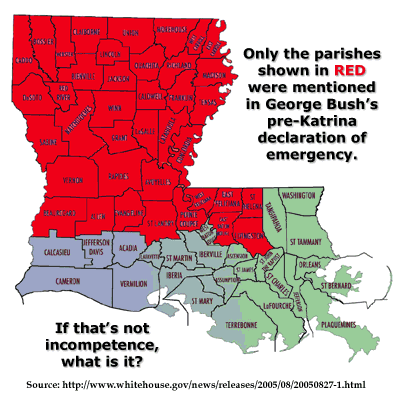
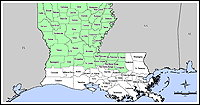
A post over on BobHarris.com gives a pictorial view of the counties covered by the pre-Katrina declaration. I'm linking the picture here. The counties in RED are the ones covered by the pre-Katrina declaration. If that map doesn't make sense to you, join the crowd. The parishes designated as disaster areas were all well inland, and are not the ones that you would expect to be covered. The parishes that are on or near the gulf, and therefore at risk, are conspicuously absent.

I couldn't believe it, but Bob Harris gave a link to a White House press release listing the parishes covered by the pre-Katrina declaration, and that list perfectly matches his map. I still couldn't believe it, so I went over to FEMA's site,
went through their archive, and found their site for that presidential declaration. The map to the left is taken from their site for that declaration. This list is exactly the same as the list on the White House website. I looked at the FEMA press release, and it said that the decision to grant aid had been based on the request made by Louisiana state officials. Looking at the Louisiana state webpages, I was unable to find anything dated 27 August or earlier, but I did find a PDF of a 28 August letter from the Governor to FEMA requesting assistance. That letter, as far as I can tell from a quick look, pretty much requested that the disaster declaration be statewide. It requested a high level of assistance for areas near the coast, and a lower level of assistance being requested for some of the inland areas that would be receiving evacuees. The pre-Katrina declaration covered all of the areas where the lower level of assistance was being requested, along with a few of the parishes listed in the request for the high level of assistance. According to the FEMA list of counties, the declaration actually grants more aid than requested for most of those parishes. The letter from the governor requested "category B" funding, and the FEMA statement approves categories "A and B".


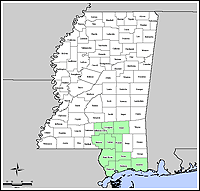
It occurred to me that the FEMA declaration might have been a matter of policy. Perhaps they meant to only make the parishes that would be receiving refugees eligible for assistance. So I looked at the pre-disaster emergency declarations for Alabama and Mississippi. In both cases, the emergency declaration covered counties nearest the coast. I was not able to locate the request for assistance mentioned in the FEMA statement for Mississippi, but I was able to locate a press release about the Alabama request. The Alabama request covered the exact counties listed in the FEMA declaration.

Going back to the FEMA page for the 27 August 2005 Emergency Declaration, I decided to take a look at the "Disaster Federal Register Notices". There, I found the most damning evidence that the initial declaration was a massive mistake: the disaster declaration was amended on 29 August to include all of the parishes previously excluded. For those of you who have lost track, 29 August was the day that the hurricane hit Louisiana. Oops.

My best guess of what happened is this: FEMA decided that Gov. Blanco's request, which covered all of Louisiana to some degree, was excessive, and they decided not to give her all of the aid that she had requested. They drew up a list of the counties to include and the counties to exclude and, possibly in a rush to get done for the presidential press event covering the declaration, got the lists crossed. And then nobody noticed the mistake until the storm hit. I'd love - totally love - to be wrong about this. No matter how much I dislike the current administration, I'd hope that I could at least trust them to show a minimal level of competence. Unfortunately, that does not appear to be the case.

The worst part of all of this is that the only way for something like this to happen is if a lot of people didn't care enough about the situation to double check their decisions. Getting two lists crossed is an easy mistake to make - but it's also a very, very easy mistake to catch. It should have been caught. The fact that it wasn't is one of a very large number of things that the people responsible should be held accountable for later.

Hat Tip: Amygdala

Communications and Science,

A little more than a week ago, Mike Syvanen posted an article on Panda's Thumb that discussed a real controversy within the field of evolutionary biology: the role of horizontal gene transfer in early evolution. Today, Paul Nelson misinterpreted that article in a post over on ID: The Future. The specifics of this incident have been covered in more detail both by at Evolving Thoughts, and at Evolutionblog. I'm going to look at this incident from a slightly different perspective: how it illustrates some of the communications issues that scientists are forced to face when dealing with creationists.

I read Mike Syvannen's article, and found it both enjoyable and thought-provoking. I certainly found it to be quite understandable. That is to be expected, of course. I am a grad student in zoology. I read scientific papers on a daily basis and I am familiar with the terms and concepts that appear in scientific papers. I suspect that reading Mike's article would be a very different experience for someone who did not have a strong foundation in biology. Such a person would have been confronted with unfamiliar terms and concepts - lots of them, tightly packed, and with very little familiar ground in between.

That is not meant in any way as a criticism of the paper. The concept of horizontal gene transfer is complex. Understanding how horizontal gene transfer might affect evolution is even more complex. Learning how to read an unrooted phylogenetic tree is complex. Understanding what a phylogenetic tree is is complex. Understanding the mathematics involved in finding the best phylogenetic tree for a set of data is extremely complex. Evolution is a complex science, and complex things can be very difficult to explain in simple terms.

Intelligent design has been accused of being a number of things. Complex isn't one of them. Anyone can follow the basic ID argument: Evolution can't explain it, so God must be the explanation. Some of the IDers might try to wrap that up in some more complex-looking outfit, but the basic argument remains unchanged. In fact, they can't really change it much, since the sheer simplicity is a large part of their argument's appeal.

That's a difficult enough situation, but unfortunately it's just the beginning. Many of the IDers are not above taking advantage of the complexities of real science. It is very easy to misrepresent a complex concept, and it can be very difficult to correct the misrepresentation. This is exactly what is happening with Nelson's misrepresentation of Mike Syvannen's article.

Nelson wrote:
Turns out Mike Syvanen is explaining why Darwin's tree of life -- Mooney and Nisbet's orthodox "common ancestry of all organisms on earth" -- may not be the case, because life may have arisen from multiple independent starting points.


That's a single, long sentence containing 37 words. I'm now going to try to explain, in as simple terms as I possibly can, why this misrepresents what Syvanen was actually arguing.

The conventional way that people have thought about evolutionary descent is as a tree, with all living things branching off from a single starting point - like the family trees that show all of the descendents of one couple. The reason that people have thought about evolution as having happened this way is because parent-to-child was the only way that anyone knew of for genes to be passed on. Over the last thirty to forty years, we have discovered that there are actually some other ways for genes to be passed on to someone else. It's been found that bacteria can transmit small pieces of DNA to other bacteria, that they can do this even between bacteria that are not part of the same species, and that the DNA can contain usable genes. People have seen this happen, and it looks like this kind of gene transmission has helped some kinds of bacteria to get resistance to antibiotics. It also looks like there are some species of virus that can move chunks of DNA from one species to another.

These kinds of non-traditional genetics seem to be more important in things like bacteria than they are in big, multicellular organisms. But way, way back in time everything that was alive was something like bacteria. If that kind of "sideways" movement of genes was important then, we might need to change the way we think about the evolution that was happening then. When we thought that traditional, parent to child genetics was all that went on, we could draw the lines of descent as all running straight from parents to children. But we can't draw those kind of lines if the "child" is also getting some genes from a somewhere else. Instead, we have to draw at least two lines leading to that child - one from the "parent", and one from any other bacteria that contributed genes. If we do that, we don't have a drawing that looks like a tree. We have a drawing that looks like a net.

What Mike Syvanen suggested is that life could have started several times in that "net" of parents, instead of just once. If he is right, then what it would mean is that not everything alive today is descended from a single species. Instead, it would mean that everything that is alive today is descended from a pool of species that were able to (and did) swap some genes back and forth. It doesn't mean that things alive today don't have common ancestry. It just means that the ancestry worked a little different, and a little bit messier, than we used to think about it.

That took 444 words, arranged in seventeen sentences over three paragraphs. It took about half an hour to write. It wasn't as clear as I hoped it would be, and there's a good chance that it would bore the hell out of anyone who isn't really interested in evolution (and maybe some who are). Paul Nelson's comment, on the other hand, was a complete misrepresentation of what was actually written, but it was short, clear, and to the point.

This is a problem. Evolution, like most of the natural world, is very complex. It is simply not possible to explain why Nelson was lying about what Syvannen said in anywhere near the number of words that it took him to do it. I suspect that Nelson and other ID proponents know this, and that is why they do it. I wish I could say that I know how we can counter that strategy, but I do not. A short and simple lie can sound a lot more compelling than a messy and complicated truth. That's just a fact, and it's something that we're going to have to continue to work around.

07 September 2005

Environment and Katrina

The Society of Environmental Journalists has compiled a couple of nice resources for anyone interested in the (massive) environmental impacts caused by Hurricane Katrina. One page gives a list of primary resources (mostly links to government sites, but some NGOs and other resources). The other is a collection of news articles on the environmental aspects of the disaster. Both are excellent sources of information on this part of the crisis.

Hat Tip: Bootstrap Analysis

06 September 2005

Tangled Bank

The 36th edition of Tangled Bank is now available at B & B. As always, it looks like there's a lot of good science blogging there Enjoy.

Boy, was that stupid.

Just when I had begun to think that we had pretty much scraped the bottom of the barrel of stupidity as far as Katrina goes, former First Lady and current First Mommy Barbara Bush proved once again that there is no bottom to that barrel. From the Independent Online:
Barbara: 'Victims poor anyway'

Barbara Bush, the former first lady, courted controversy by pointing out that many of the people forced out of their homes by Hurricane Katrina "were underprivileged anyway". Mrs Bush, who joined her husband, George, on a tour of the Houston Astrodome, said: "And so many of the people in the arena here were underprivileged anyway, so this is working very well for them. What I'm hearing, which is sort of scary, is they all want to stay in Texas. Everyone is so overwhelmed by the hospitality."


Wow. I mean, really. Wow. For a minute there, I thought I'd actually never seen that level of painfully stupid ignorance. But after a minute, it picked the scab off of some old memories. Once, a long time ago, I actually ran into that level of cluelessness.

It was back in the early nineties. David Dinkins was the major in New York, and I had a summer internship at the Mayor's Action Center, where I worked on a consituent complaints hotline. It was kind of fun. We had a primitive call-routing voicemail system - "Push one for welfare issues, push two for parking violations" type thing. I was usually on button six - "For all other complaints". Some of the issues were legitimate. Others involved reassuring people that we had nothing to do with the CIA and their mind rays.

About this time, someone on the mayor's staff came up with the idea of having "City Hall in the Boroughs" weeks. The principle was that the city was big, and it would look good if the mayor went out and worked in the parts of the city that weren't Manhattan. For "Mayor in Staten Island Week", things got interesting. The Staten Island Borough President and the Mayor were not on good terms, so when we went to Borough Hall, we didn't get good quarters. My unit - me, another guy, our boss, and sometimes his boss were all quartered in a large janitorial closet. I'm serious. There was even a slop sink in there - smelled like it hadn't been cleaned for the better part of a decade.

Anyway, I'm working the special hotline that we've got set up. It wasn't well publicized, so there wasn't too much work for most of the first day. About one, the phone rang, and I picked up. On the other end, there was an older lady who absolutely needed to get the mayor to pay attention to an absolutely critical problem.

Airplane noise.

Apparently, a change in the landing pattern for Newark had resulted in flights over her house, and a lot of noise. What, exactly, the mayor was supposed to do about it I'm still not sure. We might have been a big city, but we didn't pack a hell of a lot of clout with the FAA. I start to tune the woman out a bit, pick up a pencil, and get back to the Times crossword puzzle while she's talking. Then, a phrase snuck in my ear and grabbed my attention:

"And do you know that we have black people on Staten Island, too?"

The pencil broke. The other call center guy, Allen, picked up the other phone, covered the handset, and started to listen in. My boss joined him. Just then, his boss and the first deputy mayor arrived, saw the huddle, and leaned over to listen in, too. I did my best to maintain a level tone.

"We are aware of that, ma'am."

"And, young man, did you know that lots of them are poor?"

I'm practically chewing a hole in my lip this time trying to keep a straight face. "I think I've read something on that, yes."

"And all those poor folks have it so, so much worse than we do."

I relaxed for a second. Maybe she wasn't as completely out to lunch as I had been thinking. "Is that right, ma'am?"

"Yes it is, young man. You should be able to figure that out for yourself. After all, with all of those tall buildings where they live, the airplane noise reverberates and it's much louder than it is here."

Nope. I was right the first time. Totally out to lunch. Allen and my boss are trying to keep their hysterical laughter inaudible over the phone line, Michael and the Deputy are singing "New York, New York" complete with can-can kicks, and I'm trying to figure out if I can drown myself in the slop sink. The old lady goes on for another fifteen minutes, and I get stuck trying to get some pro forma answers out of the FAA. No good deed goes unpunished.

The whole incident seems kind of funny now, but when I look at it in light of Mrs. Bush's remarks, it also seems to be sad and a little scary. The disconnect between social groups in this country has grown so large that it seems like some people are simply unable to comprehend the difficulties that others are faced with on a daily basis. The people who live in the Stapleton Homes and other public housing projects have a huge number of concerns. Airplane noise simply doesn't make it past the first cut. But at the same time, home is home, and losing it is not easy. Nor does finding a nice, comfortable homeless shelter make up for the trauma of having suddenly become homeless, no matter how poor you are.

This is yet another weakness in our society that Katrina has illustrated for us. We have become so divided by background and class that there is a lack of comprehension about what the real problems are that people face.

The Noodly Appendage

Thanks to Orac I've blown a whole bunch of time playing the Flying Spaghetti Monster Game today. A total waste of time. But fun and addictive.

05 September 2005

Cindy Sheehan and Bush's environmental policy

Cindy Sheehan decided, in a message posted over on the After Downing Street blog, to take a swing at Bush over the situation in Louisiana:

Well, George and I are leaving Crawford today. George is finished playing golf and telling his fables in San Diego, so he will be heading to Louisiana to see the devastation that his environmental policies and his killing policies have caused. Recovery would be easier and much quicker if almost ½ of the three states involved National Guard were not in Iraq. All of the National Guard's equipment is in Iraq also. Plus, with the 2 billion dollars a week that the private contractors are siphoning from our treasury, how are we going to pay for helping our own citizens in Louisiana, Mississippi, and Alabama? And, should I dare say "global warming?" and be branded as a "conspiracy theorist" on top of everything else the reich-wingers say about me.
I don't disagree with everything in this paragraph. I think it is true that things would have been easier in Louisiana, Mississippi, and Alabama if so many of their National Guard troops weren't deployed. It is also true that she and Bush left Crawford, and that Bush, several days after the disaster started, finally concluded his vacation. And it is true that he went to Louisiana. Those few points aside, that paragraph is packed with inaccuracies and errors.

Some of the points are related to Iraq, and I don't intend to spend too much time on them. It is worth pointing out that not all of the National Guard's equipment is in Iraq - the units that deployed brought their equipment, but the units left behind have equipment, too. It is also worth mentioning that, although the cash flowing into the Iraqi black hole is significant, there is still money to spend at home - and there would be more if not for the tax cuts.

Her choice of descriptive language also leaves something to be desired. Comparing one's opponents to the Nazi's does justice to neither. It minimizes the horrors perpetuated by the Nazis, and it demonizes the opponents while doing nothing to encourage reasonable discourse. This particular cheap shot doesn't even have the virtue of being funny or clever - on a scale of witty insults that runs from Michael liberalismm is a mental disease" Savage to Winston "in the morning I shall be sober" Churchill, "reich-wingers" barely breaks the Bill O'Reilly mark. I could go on, but Orac handles this type of comment better than I possibly could.

As far as I'm concerned, those comments, poorly thought out as they were, are really the side show. The main event for me is Sheehan's massive misunderstanding of environmental science and policy. Sheehan seems to want to put as much of the blame as possible on Bush. Picking out a single scapegoat may be satisfying, but it is wrong.

The environment, the impacts that the human species has on the environment, and the effects of our impacts are all very complex issues. Like most complex issues, there is no single cause. As is frequently the case in real-world situations, events may have more than one cause, and the exact contribution of each factor can be very difficult to pin down. Hurricanes are certainly complex, and the causes of hurricanes are equally complex. Many things, including global warming, may have gone into making this storm as bad as it was. Blaming Bush's environmental policies is irresponsible, not to mention wrong.

It is far from clear whether or not global warming played a role in making this hurricane as strong as it was. The warmer-than-normal waters of the Gulf of Mexico were certainly responsible, but how much of that was caused by global warming and how much of that was simply the result of a warmer-than-normal year is much more difficult to say. Remember, half of all years will be warmer than average. A certain small percentage of them will be significantly warmer than average. That's just the nature of how we define "average", and the nature of the bell curve. It is theoretically possible that the Gulf temperatures would have been almost as warm without any greenhouse warming.

But let's assume that greenhouse-gas caused global warming is entirely responsible for the elevated temperatures of the Gulf of Mexico. It's still not all Bush's fault. We have been pumping carbon dioxide and other greenhousegasess into the atmosphere for a long time now. We've known about the possible effects for a long time. ("We" does not just refer to the United States, but to the world.) No matter what we do, it will take a long time to undo what has already happened. If Bush had managed to drop the US emissions of CO2 to zero during the second year of his administration, atmospheric levels would still be high, and the sea surface temperatures in the Gulf may well have been just as high.

Now, please don't take this the wrong way. I am not a climate change "skeptic". I think that the evidence for global warming is real, and very, very credible. Carbon dioxide is a greenhouse gas, we do release large quantities of it into the air as the result of burning fossil fuel, atmospheric levels of CO2 have shown a steady increase over the last few decades, and temperatures do appear to be rising. As a result of these increased temperatures, we can expect increased numbers of hurricanes overall, and increased hurricane strength overall. Those are general trends, they are things that we need to keep in mind, and they are certainly worth discussing in light of recent events. There is a large gap, however, between those statements and saying that global warming was responsible for this hurricane.

Wetlands loss is another issue that was involved in the damage from this hurricane. Wetlands have the ability to effectively "soak up" some of a storm surge, and having wetlands between you and the ocean can reduce the risk of damage from a storm surge (or tsunami). It is true that there has been a great deal of wetlands loss in the Mississippi Delta, and that these wetlands could have helped mitigate some of the damage. Here, again, we cannot simply blame Bush for the damage. Like global warming, this is a problem that has been decades in the making, and it is a problem that has many contributing causes. As was the case with global warming, I doubt that Bush could have reversed enough of the damage to make a difference if he had tried.

I am not saying these things in defense of the president's environmental record. Bush's record on the environment is absolutely atrocious. He certainly has not helped with either global warming or wetlands management. He seems, throughout his presidency, to have done his absolute best to gut what limited environmental protections we have. Despite all of this, we simply cannot say with any reasonable degree of sympathy whether or not his policies were a major contributing factor in this disaster, and if they were, to what degree. It is certain that his environmental policy did not help. It is possible, if not likely, that it hurt. But it is irresponsible and indefensible to claim that they were the cause.

This disaster has caused enormous loss of life, enormous suffering, and enormous damage. It has revealed and is revealing fundamental flaws in the way that we, as a nation, deal with these type of disasters. If we are to have any hope at fixing these problems, it is going to take a national discourse and a national debate on quite a number of details. This discourse will need to be as bipartisan as possible.

Please note that I am not trying to say that we shouldn't assess blame. We should, we must, and we undoubtedly will. I am also not trying to say that this isn't the time for criticism. It is - most mistakes can be fixed easier the sooner that they are noticed. What I am saying is this: this is a national disaster that we have handled abysmally. Mistakes seem to have been made at virtually every possible level, and these mistakes need to be addressed. Addressing them should take place in as careful and reasonable a manner as possible. Hurling unsupportable accusations and insults, particularly when they are poorly supported by the facts, does absolutely nothing to help in this process.

04 September 2005

What control?

An article in the Washington Post contains an interesting paragraph toward the end of the piece:

On television, Chertoff was omnipresent, dispatched by the administration to appear on all five Sunday news shows after FEMA Director Michael Brown's damage-control efforts met with little success last week.


Strangely, I'm not actually sure what the intended meaning of this paragraph is. Do they mean that "Brownie" has been barred from the talk shows because his initial efforts at controlling the damage in New Orleans have proven to be so inept? Or are they trying to indicate that the former head of the International Arabian Horse Association is not going to do the talk shows because he is even less competent at political damage control than he is at the real thing?

I hope it's for the former reason, but given Bush's habit of promoting those in the administration who have committed egregious errors, I doubt it.

The Levees

There's a good article on the situation with the New Orleans levees over at Acronym Required.